
Analysis
Analysis of Interstellar
Interstellar uses the coldest physics — black holes, relativity, dimensions — to tell the warmest possible story: a father’s love as a force able to cross time.
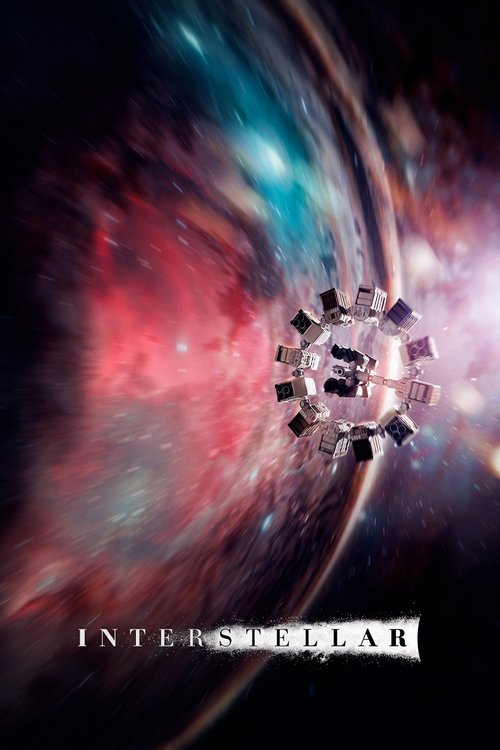
- Directed by
- Christopher Nolan
- Year
- 2014
- Country
- United States
- Rating
- 6/7 · Very good
Synopsis
On a dying Earth, former pilot Cooper leaves his children to lead a mission through a wormhole in search of a new home for humanity. Relativity makes every hour on another planet cost years on Earth, and Cooper must choose between saving the species or returning to his daughter.
Conflict and characters
The conflict pits two loves against each other: duty to humanity and duty to his daughter Murph. Cooper’s superobjective — to get home — clashes with the mission.
The great antagonistic force is non-human: time itself, which dilates and steals years in minutes, and a cosmos indifferent to human desire.
Narrative structure
The structure is built on parallel action: what lasts minutes for Cooper is decades for Murph on Earth, and the cross-cutting between both lines multiplies the emotion. The third act, inside the tesseract, turns physics into a visual metaphor.
Symbolism and themes
The watch Cooper gives Murph is the great symbol: time as the only language in which a father can speak to his daughter across dimensions. Dust, bookshelves and gravity function as signs of a message that takes years to decode.
Global interpretation
It’s large-scale cinema of ideas, visually overwhelming and emotionally ambitious. Its underlying context about survival and legacy is powerful, though some dialogue over-explains and the final solution asks for a leap of faith. Even so, few commercial films dare this much.
Premise
Love, like gravity, crosses time and space: it’s the one force a father can send across dimensions.
Technical data and poster via TMDB. This product uses the TMDB API but is not endorsed or certified by TMDB.