
Analysis
Analysis of Coco
Coco turns the Day of the Dead into a perfect dramatic machine for beginners: clear conflict, a round structure and a premise you feel in your chest.
- Directed by
- Lee Unkrich, Adrian Molina
- Year
- 2017
- Country
- United States
- Rating
- 6/7 · Very good
Synopsis
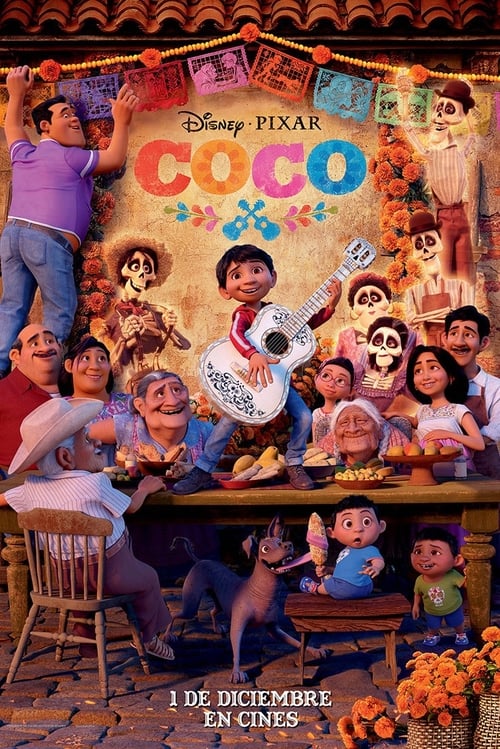
Miguel, a Mexican boy from a family that forbids music, accidentally travels to the Land of the Dead on the night of the Day of the Dead. There he seeks his idol’s blessing, but uncovers the truth about his great-great-grandfather and learns that memory is what keeps the departed alive.
Conflict and characters
The conflict is set up with textbook clarity in the first scene: Miguel wants to be a musician, BUT his family forbids it. His superobjective is to play; the antagonistic force is his own family and, beneath it, an unresolved wound from the past.
Narrative structure
The structure is an exemplary hero’s journey, with a well-planted surprise twist (the real villain) and a climax that is emotional rather than action-driven: the song “Remember Me” sung to Mamá Coco. It’s a model for studying how to build an ending that earns tears without over-manipulating.
Symbolism and themes
Music is the symbol of identity and desire; the altar photos (the ofrenda), of the memory that sustains existence. The “second death” — being forgotten — is the central metaphor, turning the film into an accessible meditation on grief.
Global interpretation
Technically dazzling and emotionally precise, Coco honors its cultural context with care. It’s somewhat predictable in its mechanics, but its premise about memory is so clear and deep that it makes the film one of the best gateways into film analysis for beginners.
Premise
Those we love don’t fully die as long as someone remembers them: memory is the most enduring form of love.
Technical data and poster via TMDB. This product uses the TMDB API but is not endorsed or certified by TMDB.